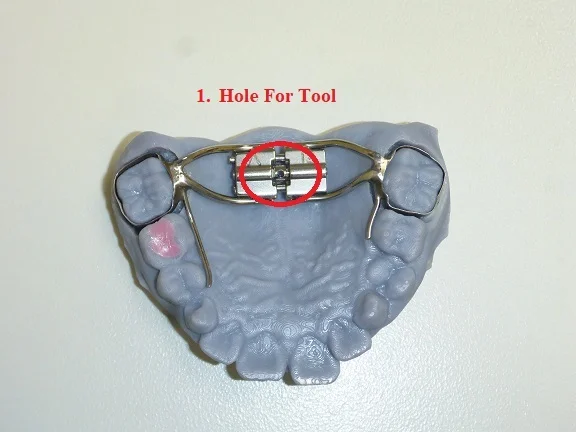
A palate expander (also called a rapid palatal expander or RPE) is an orthodontic device used to widen the upper jaw. It's attached to the upper molars and works by gently separating the bones of the palate.
Expanders are most effective in growing children, as their bones are still developing and can be more easily adjusted. This treatment can help avoid tooth extractions and create space for proper alignment.
Makes room for crowded teeth
Corrects crossbites and narrow arches
May eliminate need to remove teeth
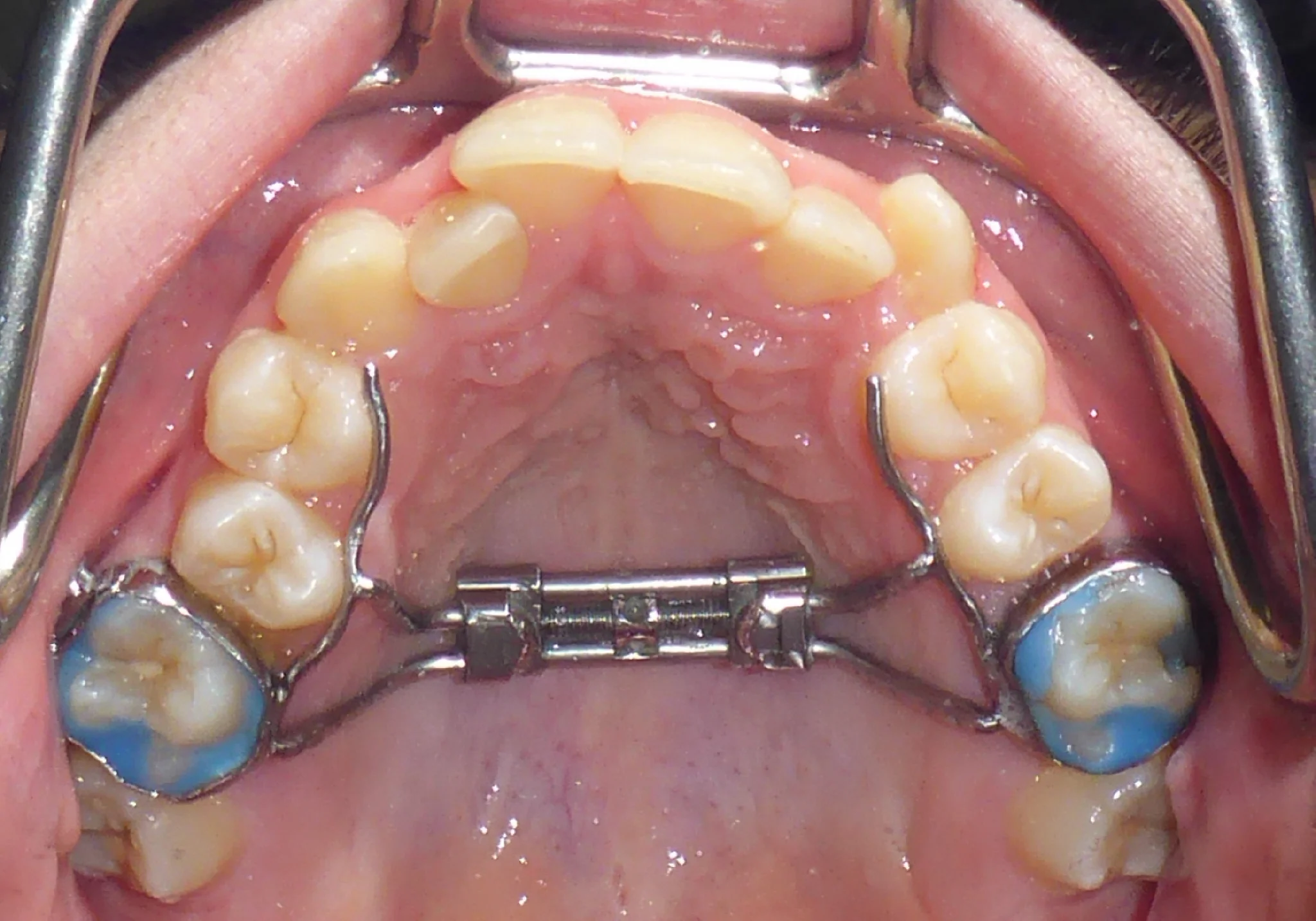
A palatal expander treats a problem that braces alone can't: an upper jaw that's too narrow. Orthodontists call it a transverse discrepancy, and it's one of the most common findings in growing mouths — studies put posterior crossbite and related narrow-arch problems at roughly 8 to 22% of child orthodontic patients.
When the upper back teeth bite inside the lower ones, the jaw often has to shift sideways to close. Expansion corrects the width mismatch so the bite — and the growth behind it — can center itself.
Widening the arch adds perimeter: measurable room along the curve where teeth line up. For moderate crowding, that space can be the difference between extracting permanent teeth and not.
Teeth that have no room to erupt — including canines drifting toward impaction — get a wider runway. In some cases expansion is part of the interception plan that keeps a canine from getting stuck.
A wider upper arch can broaden the visible smile, reducing the dark corridors at the corners of the mouth.
The upper jaw grows in two halves, joined down the middle by a growth seam — the mid-palatal suture. Through childhood the seam is adaptable: an expander can gently widen the jaw itself, skeletally, over a few weeks. In the teen years the seam progressively knits together, and by adulthood true skeletal expansion usually requires surgical assistance. That's the entire argument for checking early — the same appliance does more, more comfortably, at 8 than at 18. The sweet spot for most children is during the mixed dentition, roughly ages 7 to 11, which is exactly what the American Association of Orthodontists' check-up-by-age-7 recommendation is designed to catch.
The expander is custom-made from a mold or scan of your child's mouth and attaches to the upper back teeth. An hour in the chair, no shots, no drilling. Speech and swallowing feel odd for a few days — that's normal and temporary.
A tiny key turn once or twice a day — usually a parent's job — widens the appliance a fraction of a millimeter at a time. A gap often opens between the front teeth: that's the growth seam responding. It's expected, and it closes later.
Turning stops, but the expander stays in while new bone fills the widened seam. This quiet phase matters most — remove the appliance too early and the width relapses.
The expander comes out, the new width stays, and the eruption runway is open. Many kids go months or years before — or instead of — any Phase 2 braces or aligners.
Day-to-day turning and cleaning instructions are just below — this page keeps living where your family can find it mid-treatment.
Follow these guidelines carefully for the best results
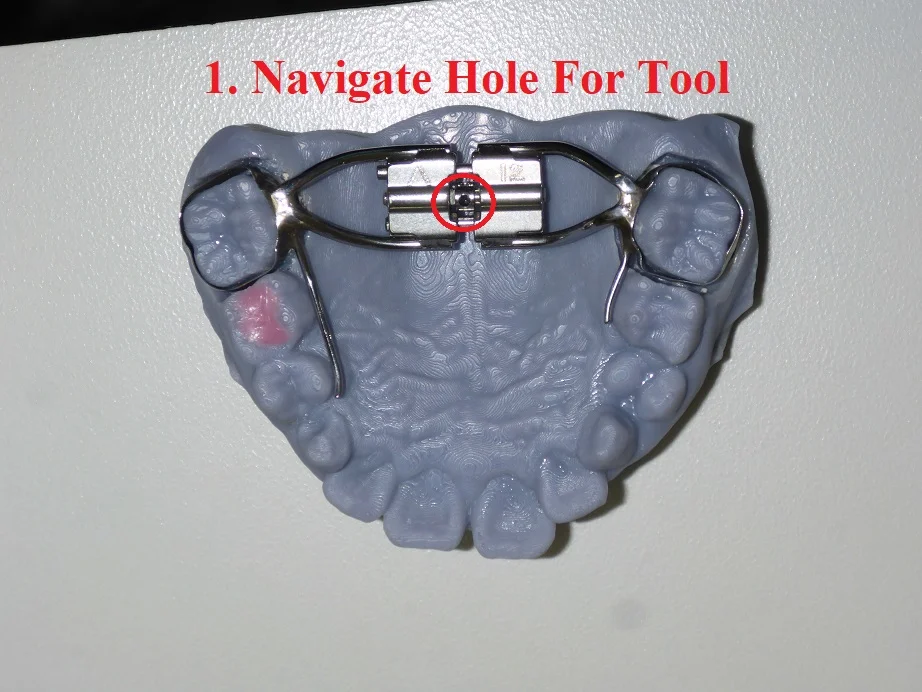
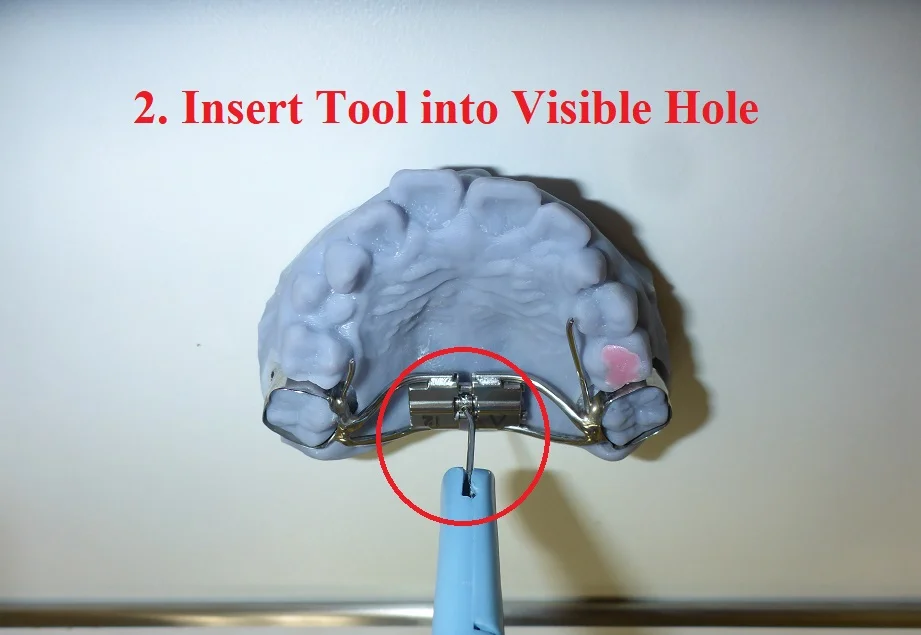
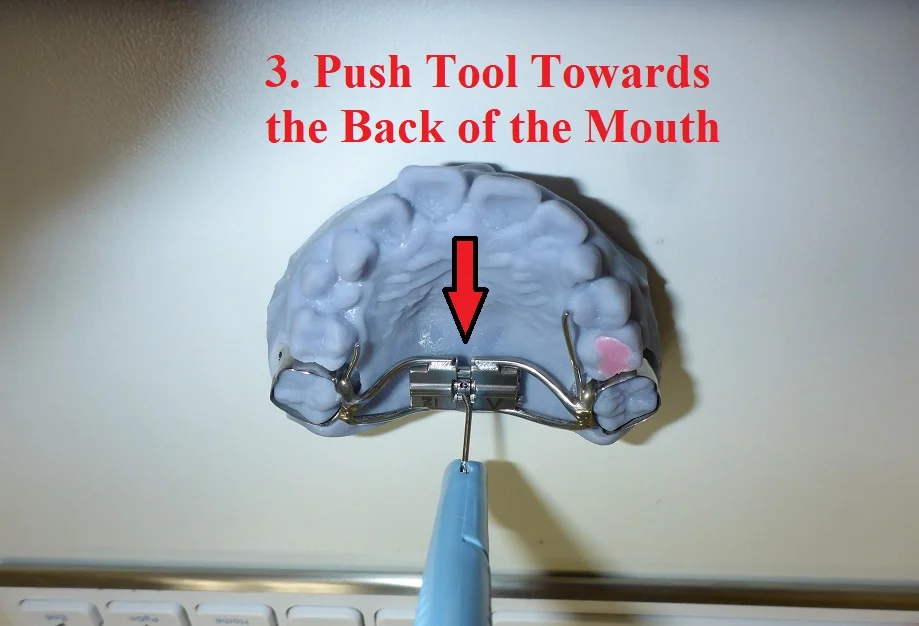
You will be given a special key to turn the expander. Follow these steps:
Turn schedule: Turn the expander as directed by your doctor - typically once or twice per day. Do NOT skip turns or do extra turns.
Questions or problems? Contact us!
📞 Glendale: (718) 386-8728
📞 Garden City: (516) 265-1535
No appliance can promise your child will never need an extraction — anyone who promises that isn't being straight with you. What expansion does is preserve options: by adding real width and arch perimeter at the age when that's still easy, many moderate crowding cases resolve without removing permanent teeth, and canines flagged early get a better path in. When crowding is severe, carefully planned extractions can still be the healthiest choice. The honest summary: early expansion doesn't guarantee a non-extraction outcome — it keeps the non-extraction outcome on the table.
Expanders are one Phase 1 tool among several — see how early and two-phase treatment works, or read about early clear aligners, which can handle some of the same arch-development goals in milder cases.
Most kids feel pressure — on the teeth, the roof of the mouth, sometimes the bridge of the nose — for a few minutes after a turn. Genuine pain is not typical; if it happens, stop turning and call us.
For the first few days, usually yes — s-sounds especially. Practice helps (reading aloud works), speech returns to normal quickly, and eating gets easy again within a week.
That gap is the appliance doing its job: the two halves of the palate separating slightly at the growth seam. It's expected, temporary, and typically closes on its own or during later alignment.
True skeletal expansion gets harder once growth ends; adult cases often call for mini-implant-assisted appliances or surgical assistance. Adult arch development is possible — it's just a different conversation, and a free exam tells you which category you're in.
Contact us or schedule an appointment to learn more about expander treatment.
Select a location to book your free consultation directly in our system.
📍 64 New Hyde Park Rd
Garden City, NY 11530
🕐 Mon, Tue, Thu, Fri: 10:00 AM - 6:30 PM
Closed Wednesdays